What are we forgetting?
Sloths - the sluggish tree-dwellers of Central and South America - spend their lives in the tropical rain forests. They move through the canopy at a rate of about 40 yards per day, munching on leaves, twigs and buds. Sloths have an exceptionally low metabolic rate and spend 15 to 20 hours per day sleeping. And surprisingly enough, the long-armed animals are excellent swimmers. They occasionally drop from their treetop perches into water for a paddle. (from Encyclopedia Britanica)
Sloths are faster than you think they are. (from Encyclopedia Slothica)
Archie and Mehitable
Don Marquis, the narrator writes:

Congratulating ourself that we had left a sheet of paper
in the machine the night before so that all this work
had not been in vain, we made an examination, and this is what we found:

    expression is the need of my soul
    i was once a vers libre bard
    but i died and my soul went into the body of a cockroach
    it has given me a new outlook upon life
    i see things from the under side now
    thank you for the apple peelings in the wastepaper basket
    but your paste is getting so stale i cant eat it
    there is a cat here called mehitabel i wish you would have
    removed she nearly ate me the other night why dont she
    catch rats that is what she is supposed to be for
    there is a rat here she should get without delay

    most of these rats here are just rats
    but this rat is like me he has a human soul in him
    he used to be a poet himself
    night after night i have written poetry for you
    on your typewriter
    and this big brute of a rat who used to be a poet
    comes out of his hole when it is done
    and reads it and sniffs at it
    he is jealous of my poetry
    he used to make fun of it when we were both human
    he was a punk poet himself
    and after he has read it he sneers
    and then he eats it

    i wish you would have mehitabel kill that rat
    or get a cat that is onto her job
    and i will write you a series of poems showing how things look
    to a cockroach
    that rats name is freddy
    the next time freddy dies i hope he wont be a rat
    but something smaller i hope i will be a rat
    in the next transmigration and freddy a cockroach
    i will teach him to sneer at my poetry then

    dont you ever eat any sandwiches in your office
    i haven’t had a crumb of bread for i dont know how long
    or a piece of ham or anything but apple parings
    and paste and leave a piece of paper in your machine
    every night you can call me archy

    (by Don Marquis)   202511021331.
    In 2024, a quantum state of light was successfully teleported
    through more than 30 kilometers (around 18 miles)
    of fiber optic cable amid a torrent of internet traffic
    – a feat of engineering once considered impossible.

    The impressive demonstration by researchers in the US
    may not help you beam to work to beat the morning traffic,
    or download your favorite cat videos faster.

    However, the ability to teleport quantum states
    through existing infrastructure represents a monumental
    step towards achieving a quantum-connected computing network,
    enhanced encryption, or powerful new methods of sensing.

    (From Sciencealert.com website.) 202510300404.
    And for all this, nature is never spent;
       There lives the dearest freshness deep down things;
    And though the last lights off the black West went
       Oh, morning, at the brown brink eastward, springs--
    Because the Holy Ghost over the bent
       World broods with warm breast and with ah! bright wings.

        (from Gerard Manley Hopkin's "God's Grandeur") 202510240426.
"Jellyfish and bananas have no bones. Otherwise the two have very little in common." (From the Encyclopedia Slothica.) 202510210338.
Attention. Attention. Lambeth. Soda. Crater. Limpet. Nugget. Pause. Pause. Tundra. Clabber. Tinker. Solar. Solar. Alpha. Cradle. Tuber. Graphite. Orbit. Attention. Attention. 202510190443.
        A LITTLE WHILE BEFORE SUNDOWN THE MEN LOUNGING ABOUT THE
    gallery of the store saw, coming up the road from the south, a covered
    wagon drawn by mules and followed by a considerable string of
    obviously alive objects which in the levelling sun resembled varisized
    and -colored tatters torn at random from large billboards—circus
    posters, say—attached to the rear of the wagon and inherent with its
    own separate and collective motion, like the tail of a kite.
        “What in the hell is that?” one said.
        “It’s a circus,” Quick said. They began to rise, watching the wagon. Now
    they could see that the animals behind the wagon were horses. Two
    men rode in the wagon.
        “Hell fire,” the first man—his name was Freeman—said. “It’s Flem
    Snopes.” They were all standing when the wagon came up and stopped
    and Snopes got down and approached the steps. He might have
    departed only this morning. He wore the same cloth cap, the minute
    bow tie against the white shirt, the same gray trousers. He mounted
    the steps.
        “Howdy, Flem,” Quick said. The other looked briefly at all of them and
    none of them, mounting the steps. “Starting you a circus?”
    “Gentlemen,” he said. He crossed the gallery; they made way for him.
    Then they descended the steps and approached the wagon, at the tail
    of which the horses stood in a restive clump, larger than rabbits and
    gaudy as parrots and shackled to one another and to the wagon itself
    with sections of barbed wire. Calico-coated, small-bodied, with delicate
    legs and pink faces in which their mismatched eyes rolled wild and
    subdued, they huddled, gaudy motionless and alert, wild as deer,
    deadly as rattlesnakes, quiet as doves. The men stood at a respectful
    distance, looking at them. At that moment Jody Varner came through
    the group, shouldering himself to the front of it.
        “Watch yourself, doc,” a voice said from the rear. But it was already too
    late. The nearest animal rose on its hind legs with lightning rapidity and
    struck twice with its forefeet at Varner’s face, faster than a boxer, the
    movement of its surge against the wire which held it travelling
    backward among the rest of the band in a wave of thuds and lunges.
    “Hup, you broom-tailed hay-burning sidewinders,” the same voice said.
    This was the second man who had arrived in the wagon. He was a
    stranger. He wore a heavy densely black moustache, a wide pale hat.
    When he thrust himself through and turned to herd them back from
    the horses they saw, thrust into the hip pockets of his tight jeans pants,
    the butt of a heavy pearl-handled pistol and a florid carton such as
    small cakes come in.
        “Keep away from them, boys,” he said. “They’ve
    got kind of skittish, they aint been rode in so long.”
        “Since when have they been rode?” Quick said.
        (From "Spotted Horses" by William Faulkner.) 201510170509.
    All they who thoughtless are, nor heed,
    What time Death’s messengers appear,
    Must long the pangs of suffering feel
    In some base body habiting.
    But all those good and holy men,
    What time they see Death’s messengers,
    Behave not thoughtless, but give heed
    To what the Noble doctrine says;
    And in attachment frighted see Of birth and death the fertile source,
    And from attachment free themselves,
    Thus birth and death extinguishing.
    Secure and happy ones are they,
    Released from all this fleeting show;
    Exempted from all sin and fear,
    All misery have they overcome.
        Anguttara-N’kãya  (From the Tibetian Book of the Dead).  202510150923.
The moral code of our society is so demanding that no one can think, feel and act in a completely moral way. For example, we are not supposed to hate anyone, yet almost everyone hates somebody at some time or other, whether he admits it to himself or not. Some people are so highly socialized that the attempt to think, feel and act morally imposes a severe burden on them. In order to avoid feelings of guilt, they continually have to deceive themselves about their own motives and find moral explanations for feelings and actions that in reality have a nonmoral origin. We use the term “oversocialized” to describe such people. (From "Industrial Society and Its Future" by Theodore Kaczynski.) 202510140830.
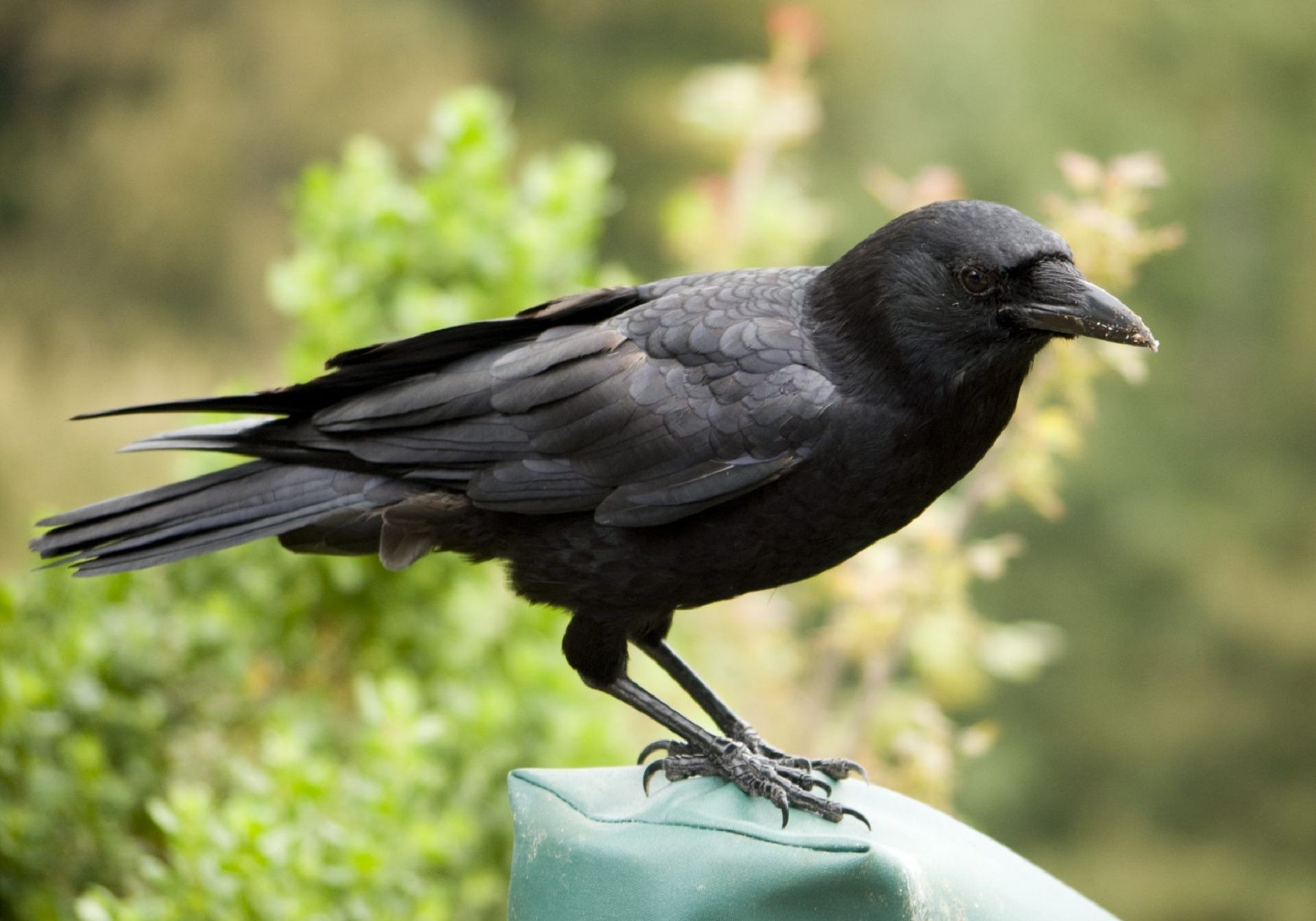
Crow. (genus Corvus), any of various glossy black birds found in most parts of the world, with the exception of southern South America. Crows are generally smaller and not as thick-billed as ravens, which belong to the same genus. A large majority of the 40 or so Corvus species are known as crows, and the name has been applied to other, unrelated birds. Large crows measure about 0.5 metre (20 inches) long, with wingspans that can reach 1 metre (39 inches).They are omnivores that enjoy meat and may even attack and kill young, weak animals. This habit makes them unpopular with farmers, as does the bird’s propensity to raid grain crops. (from Encyclopedia Britanica)
Crows are believed to carry the souls of the dead to the Underworld. According to the Encyclopedia Slothica, this is a true fact. However it is not confirmed or supported by other sources. 202510120105.
If one should desire to live in this world a hundred years, one should live performing Karma (righteous deeds). Thus thou mayest live; there is no other way. By doing this, Karma (the fruits of thy actions) will not defile thee.
If a man still clings to long life and earthly possessions, and is therefore unable to follow the path of Self-knowledge (Gnana-Nishta) as prescribed in the first Mantram (text), then he may follow the path of right action (Karma-Nishta). Karma here means actions performed without selfish motive, for the sake of the Lord alone. When a man performs actions clinging blindly to his lower desires, then his actions bind him to the plane of ignorance or the plane of birth and death; but when the same actions are performed with surrender to God, they purify and liberate him. (From the Upanishad) 202510110414.